 Seattle Streets Alliance
A Community Vision for Rainier Ave S
- clara
- Oct. 30, 2026
Everyone deserves to be safe on our public streets and in our neighborhoods. Yet in Seattle and nationwide, communities of color are disproportionately impacted by unsafe streets and have the least access to safe, healthy, and affordable transportation. Communities most impacted by traffic violence should be a part of defining solutions for safety.
Rainier Ave S runs through the heart of Southeast Seattle, and it is one of the most dangerous streets in the city.
The Rainier Ave Youth Team was convened from 2025-2026 by Seattle Streets Alliance in partnership with the Washington Traffic Safety Commission. It was a Black-led team of 11 people, including 6 youth, who live, work, attend school, or play in the Rainier Valley and regularly walk, bike, scoot, take transit, use wheelchairs, and drive along Rainier Ave S. The work was to conduct community outreach in Black and BIPOC communities along Rainier Ave S, talk about safety with the community, and make community recommendations for the future of the corridor.
The Rainier Ave Youth Team's work is now complete! Read their full report.
Our Work
The Rainier Ave Youth Team organized intentionally to center the perspectives of Black youth and other community members most impacted by unsafe street conditions. From 2025 to 2026, their outreach included:
- Hosted 5 listening sessions in which they engaged over 150 community members, including over 50% BIPOC youth.
- Hosted 3 other community events including an accessibility audit of Rainier Ave S from S Dearborn Street to S Massachusetts St, a vigil for World Day of Remembrance for Road Traffic Victims, and a community report-back.
- Built relationships and collaborated on 3 community events reaching over 200 people total, including two large community forums and a community teach-in, working collaboratively with other BIPOC community groups across the south end.
- Conducted outreach tabling and talking to community members at public events and door knocking at hundreds of doors in the Rainier Valley.
What Rainier Ave Youth Group Heard
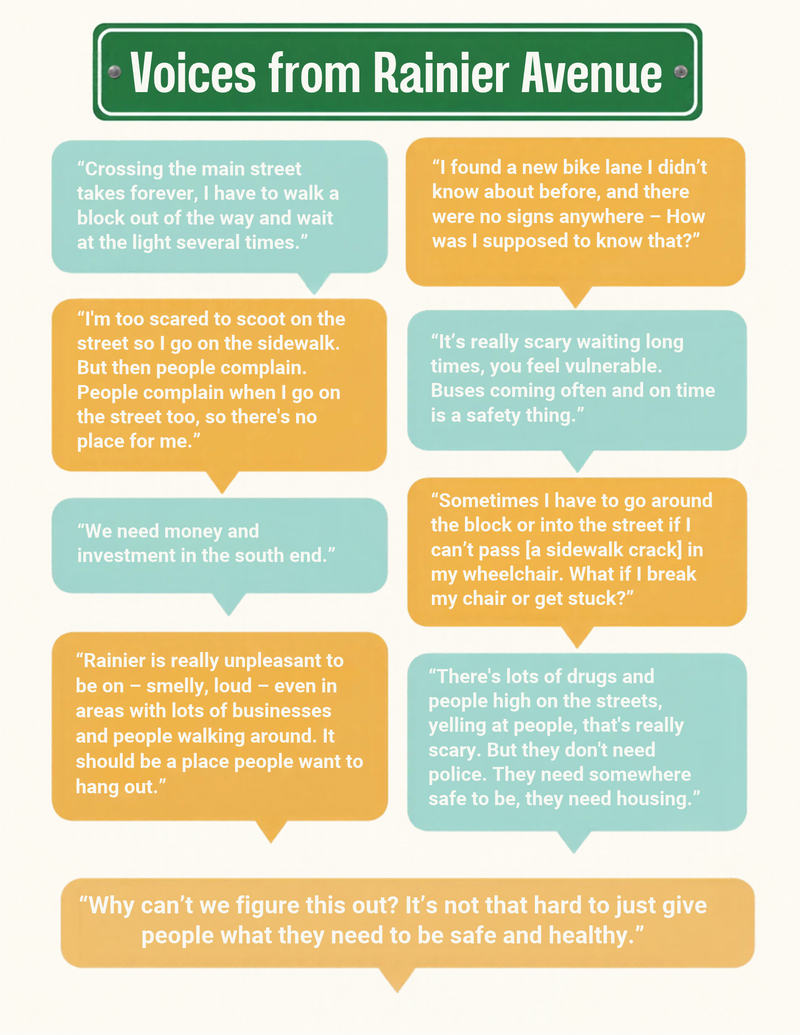
Community members provided input on and recommendations for safety along Rainier Ave S through our outreach and engagement. Participants had specific physical recommendations about sidewalks, pedestrian crossings, lights, bike and scooter lanes, speeding, cleanliness, public restrooms, and more. Conversation also included transit reliability, harassment, enforcement, systemic lack of investment due to redlining, ongoing maintenance issues, and the impact of these issues on affordability, housing, displacement, jobs, education, services, public health, public safety, and more. To read a full summary of what the Rainier Ave Youth Group heard, check out the full project report.
How Young People Get to School
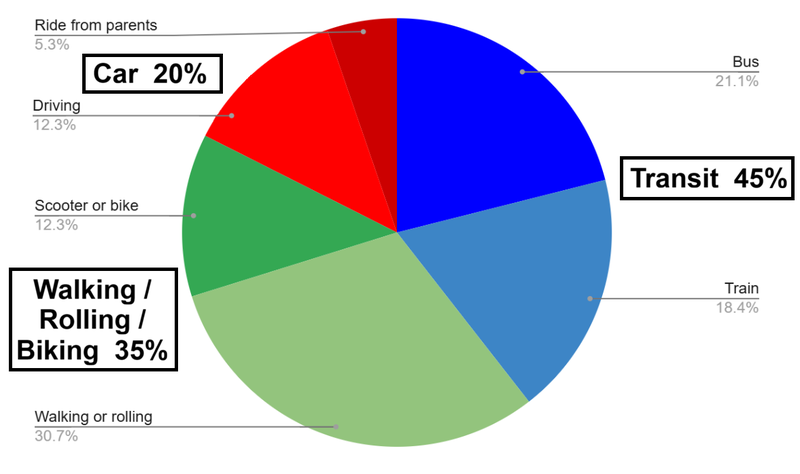
How Young People Get to School: Transit 45% (Bus 24%, Train 21%); Walking or Rolling 35% (Walk 21%, Scooter or bike 14%); Car 20% (Driving 14%, Ride from parents 6%). A majority of young people surveyed were Black students in the Rainier Valley.
Community Recommendations for Safety Along Rainier Ave S
Recommended Physical Improvements
- Slow Car Traffic: Change the infrastructure of the roads so that cars drive slower. This means fewer cars, narrower streets, and speed bumps.
- I-90 Safety: Improve safety around the I-90 on-and off-ramps by “Squaring up” the intersections so that drivers are forced to slow down and it is safer for pedestrians.
- Sidewalks: Build wider sidewalks and more space for pedestrians throughout the corridor, but especially in areas with a lot of people moving into apartments. In key locations, add more pedestrian lighting and physical protection like bollards or concrete to protect people and buildings from car crashes.
- Bus Stops: Maintain the number of bus stops to support current bus ridership. Improve bus stops with level boarding and more seating, shelters, and trash canisters.
- Pedestrian Crossings: Add more safe pedestrian crossings, including signals, flashing lights, reflective signs, or crossing islands to make it safer to cross the street.
- Bike and Scooter Lanes: Build safe bike and scooter lanes that are wide, direct, and comfortable. The lanes should be accessible and easy to find, use, and navigate, especially for people who are not familiar with Seattle’s larger bike network.
- Maintenance: Significantly increase maintenance of sidewalks, bumpy roads, and potholes to maintain accessibility. Also increase regular street cleaning.
- Public Restrooms: More public bathrooms, especially at transit hubs and gathering spaces.
- Spaces for People: Create more vibrant spaces to encourage people to linger, including free public places where young people can hang out. Spaces should have trees or other greenery and buffers between spaces for people and car thoroughfares that will make spaces for people on the street that are safer, quieter, and more comfortable. In addition to permanent spaces, streamline processes to make it easy and accessible for people to permit temporary block parties and events that make use of street space.
- Ramps: Build more ramps instead of stairs or curbs at access points along the street and into parks, public spaces, buildings, and businesses. This will benefit people in wheelchairs and those using strollers or hand carts immediately, but also make accessibility more normalized for everyone.
Recommendations for Other Investments
- Basic Needs: Ensure that people in our city have their basic needs met like housing and food to make our streets safer.
- Bus Service: Improve bus service so that buses are faster, more frequent, and more reliable, including increasing service at night and on weekends. Make transit free for everyone, not just for youth. Keep bus stops closer together to maintain access for disabled people, elders, families with young kids, and everyone else who relies on transit.
- Clean Transit: Improve response times for cleaning crews on transit to clean messes on buses, trains, or in elevators. Buses and trains should have more masks available and better air flow and filtration.
- Transit Security: Transit security should have more people trained in de-escalation and mental health crises. Add safety measures like better lighting, emergency call buttons at transit hubs, and more gates to prevent people from being hit by trains. Surveillance cameras do not add to a feeling of safety.
- More Space on Transit: Expand the section of buses and trains with folding seats for disabled people and people with luggage or hand carts. This space is often full, and having more convertible space also provides more space for people standing during rush hour.
- Expanded Lime Service: Expand Lime bike service across King County, not just in Seattle, so that they can help people access transit in areas without good transit service. They should also come with collapsable helmets.
- Driver’s Education: The state should pay for driver’s education. It doesn’t make sense that it’s so expensive if we want people to drive safely and fewer kids to drive illegally.
- Anti-Displacement: Displacement is incredibly disruptive to our transportation system, and vital new development needs to come with parallel programs and policies to combat displacement and help people stay in their homes or move to another space within their community.
- Equitable Investment: Invest in the south end. This means physical improvements like sidewalks and safe street crossings, but also investments in programs to help our communities live and thrive and not be pushed out of Seattle.
- Public Programs for Young People: Fund more programs for young people to have safe and productive places to be in community. More paid opportunities for youth, supportive staff at school, resources, mental health services, and after-school programs.
Community Goals
- Continued community engagement and investment. The work outlined in our report is just a start. The Rainier Valley is home to many communities that are often overlooked or ignored by city planners. Our goal is to continue to fight for underserved communities, deepen our relationships within south end communities, continue to build organizing skills, and continue to look beneath the surface of issues that often get overlooked by the system.
- Rapid progress towards long-overdue safety investments on Rainier Ave S. The south end deserves safe streets, especially on this main corridor past schools, parks, community centers, libraries, and business districts. Our goal is to continue to work with the city, county, and state to advance long-awaited safety investments on Rainier Ave S to keep our communities safe.
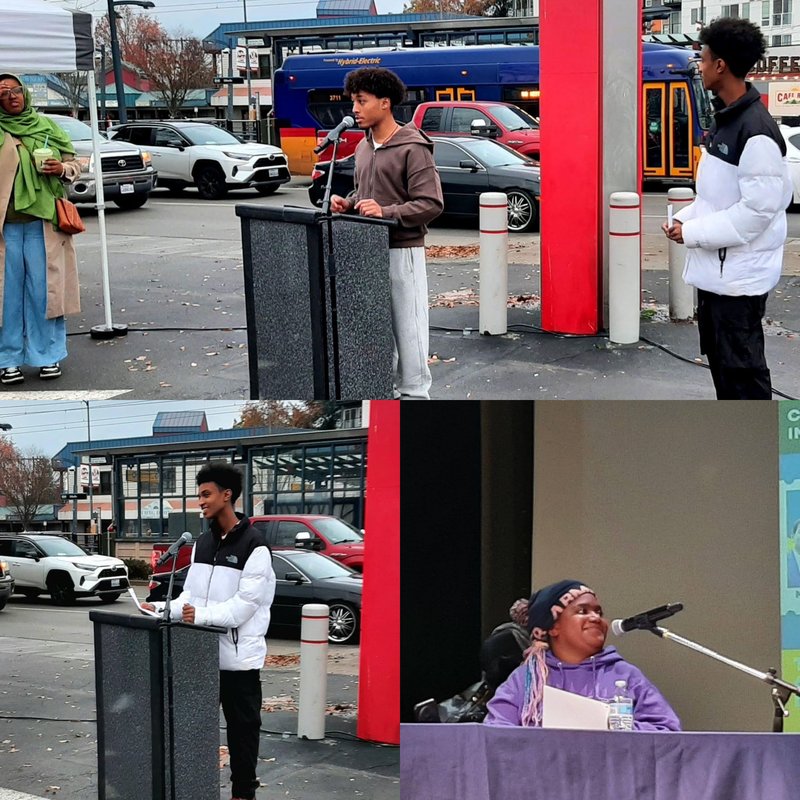
Rainier Ave Team members Abdalla, JaNaya, and Isaac speaking at community events.
Our Reflections
This task force was an incredibly valuable experience for participants. The Rainier Ave Youth Group built valuable organizing skills that will serve them and fellow advocates in the work going forward. They also gained valuable community knowledge, confidence, and skills in how to engage with city officials and elected leaders.
Through this process, we learned a lot about the Seattle community, and feel more connected to our communities and neighborhoods. Building relationships within our team and externally with other groups, organizers, and neighborhood leaders was a highlight. These skills and relationships will continue and will be useful for anything we choose to do next after the conclusion of the Rainier Ave Team work.
The Rainier Ave Youth Group was honored and inspired to be able to learn from and organize alongside KL Shannon, with her long history of organizing and her focus on organizing with heart. Their goal for the future is to continue the fight that KL had for all of us, to continue to work towards justice.
Stay Connected
Although the Rainier Ave Youth Committee has completed its work, the work on Rainier Ave S continues!
Subscribe to Seattle Streets Alliance to stay connected. Reach out to Clara [at] streetsalliance.org for more information on the Rainier Ave Committee and their work.
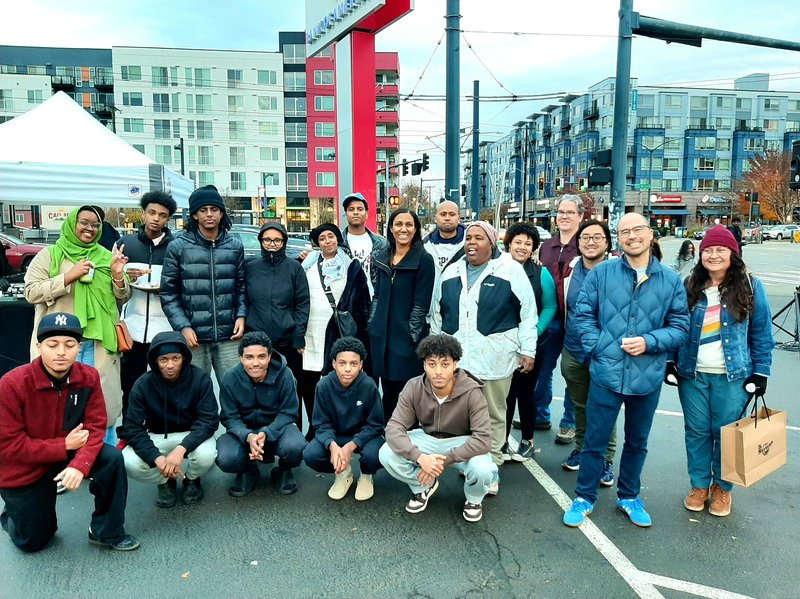
Members of the Rainier Ave Team with community members and City Councilmembers Dionne Foster and Eddie Lin at the Vigil for World Day of Remembrance, 2025.